
The Fine Line Between Smooth and Stripped
- Danielle
- Jan 16
- 2 min read
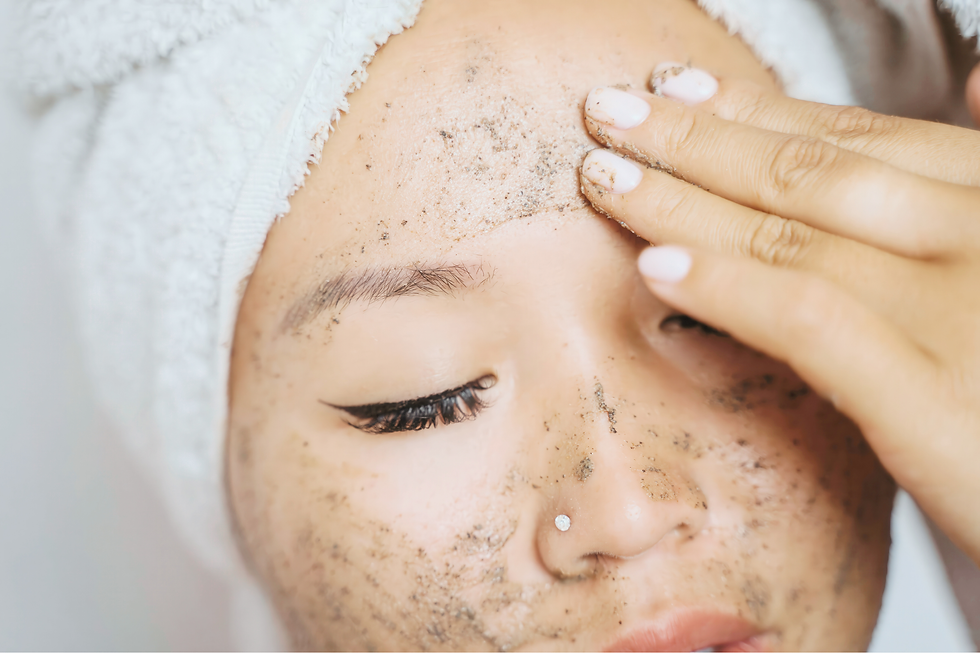
Refine, Don’t Scrub: how to exfoliate properly without damaging your skin
Exfoliation is one of those skincare steps people either overdo or skip altogether. Done well, it quietly improves almost everything else in your routine.
Here’s how to exfoliate properly – without stressing your skin.
Why Exfoliation Matters
As skin ages, cell turnover slows. Dead skin cells linger longer than they should, which can lead to:
Dull or uneven-looking skin
Rough texture and dry patches
Congestion and breakouts
Skincare products sitting on the surface instead of absorbing
Exfoliation removes that build-up, revealing fresher skin underneath and helping your serums and moisturisers do their job properly.
Who Should Be Exfoliating?
To misquote the folk at Coca-Cola - the answer here, is "Anyone with a face" Most skin types benefit from exfoliation – it’s about choosing the right type and frequency.
Exfoliation is especially helpful if your skin feels:
Dull or tired
Rough or uneven
Congested around the nose or chin
Patchy under makeup
Go gently if your skin is sensitive, reactive, or already using strong actives. Healthy skin responds best to consistency, not force.
Physical vs Chemical Exfoliation
Physical Exfoliation
Physical exfoliation uses fine particles to manually remove dead skin cells.
Best for:
Mild surface texture
Occasional use
An instant smooth-skin feel
Our Exfoliating Treatment combines gentle fruit acids with superfine exfoliants to polish the skin without harshness.
Tip: pressure matters more than grit. Light hands, small circles, done.
Chemical Exfoliation
Chemical exfoliation uses acids to dissolve the bonds holding dead skin cells together.
Lactic acid (an AHA) is ideal for:
Smoothing texture
Brightening dull skin
Improving uneven tone
Our 15% Lactic Acid Peel offers deeper resurfacing for skin that needs more than a surface polish.
This is your option when skin looks flat, uneven, or stubbornly dull.
How Often Should You Exfoliate?
More is not better. Rhythm matters. If skin feels tight, sore, shiny or irritated, take a break.
Physical exfoliation
Normal or combination skin: 2-3 times per week
Dry skin: 1-2 times per week
Sensitive skin: every 10–14 days
Chemical exfoliation
Normal or resilient skin: 2-3 times per week
Dry skin: 1-2 times per week
Sensitive skin: every 10–14 days, starting slowly
A Few Golden Rules
Always exfoliate on clean skin
Follow with hydration and barrier support
Wear SPF daily to take care of that fresh, baby skin
Avoid stacking strong actives on the same day
Which One Is Right for You?
Exfoliating Treatment A dual-action exfoliator that combines natural fruit acids with superfine pumice to resurface and polish.
15% Lactic Acid Peel A deeper chemical exfoliant for refining texture and boosting brightness.


